
Sunscreen Roller Blinds: How Openness Affects Light, Privacy and Heat
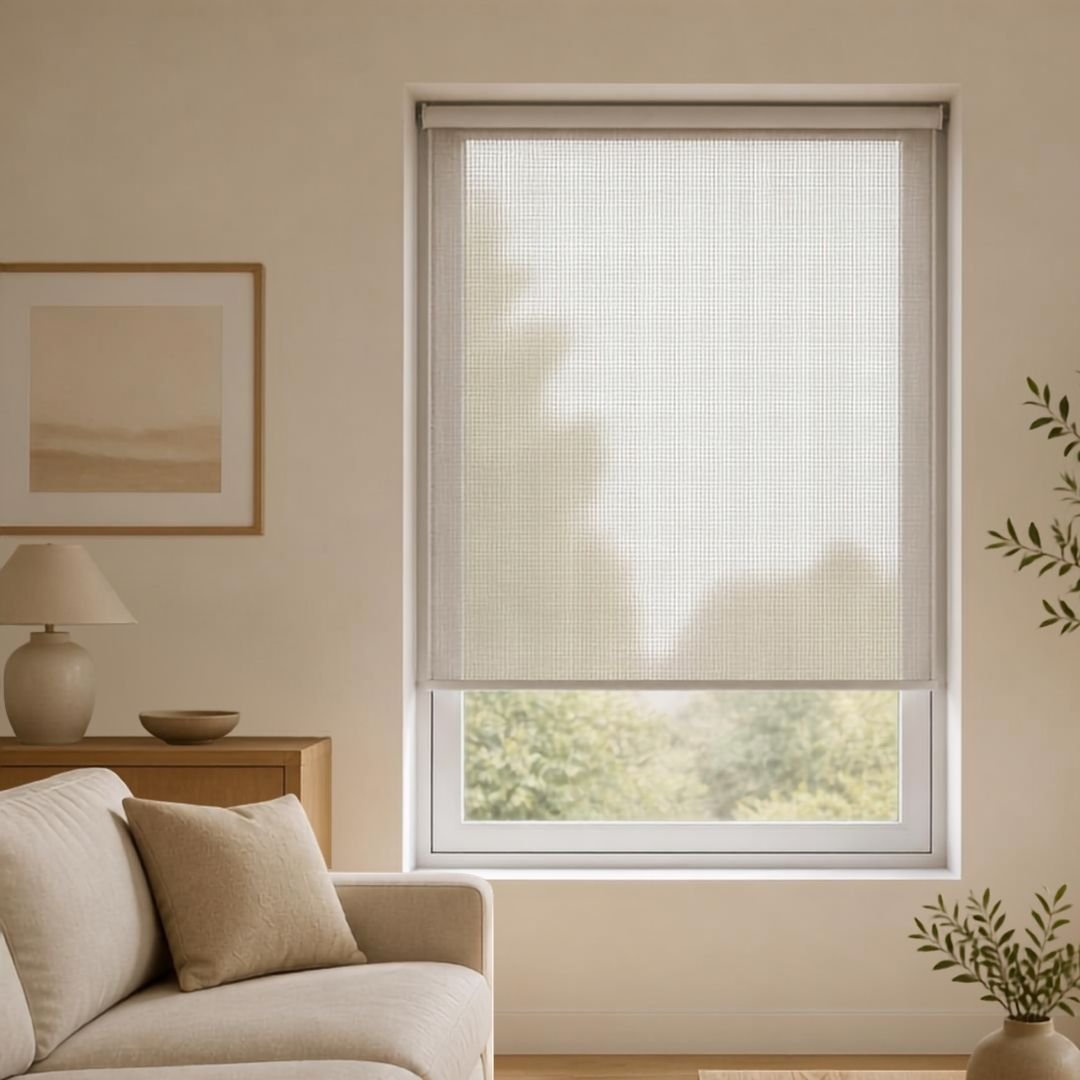
If you’ve ever stood in a Dubai living room at four in the afternoon, you know the problem. The sun pours through the glass, the TV is unreadable, the sofa is too hot to sit on and the AC is working overtime. Closing a blackout blind fixes the glare but turns the room into a cave. This is exactly what sunscreen roller blinds are made for.
But when you start shopping, you’ll see terms like “3% openness” or “5% openness” and very little explanation. This guide explains what openness means, how it changes light, privacy and heat, and how to choose the right one for each room.
Quick viewWhat is openness in a sunscreen blind? It’s the percentage of the fabric that is open weave, the tiny gaps between the threads. Lower openness (around 1–3%) blocks more glare and heat but gives a softer view outside. Higher openness (around 5–10%) keeps more of the view and daylight but lets in more glare and heat. Colour matters just as much: darker fabrics give a clearer view out, lighter fabrics reflect more heat.
What openness actually means
Sunscreen fabrics are woven with a very fine open mesh. The openness factor is simply how much of the fabric is holes rather than threads. A 3% openness fabric is 97% thread and 3% gaps. Those tiny gaps are what let you see outside while the blind is down.
Think of it like sunglasses for your windows. The blind cuts the harsh brightness and much of the heat from direct sun, but you can still see the palm trees, the pool or the skyline. That’s the key difference from a blackout roller blind, which blocks light completely, and from a sheer roller blind, which is soft and decorative but does far less for heat and glare.
1%, 3%, 5% or 10%: how they compare
| Openness | View out | Glare control | Heat control | Typical use |
|---|---|---|---|---|
| Around 1% | Soft, hazy | Excellent | Best of the range | Very sunny west-facing rooms, screens |
| Around 3% | Good | Very good | Very good | The all-rounder for most UAE living rooms |
| Around 5% | Clear | Good | Good | Rooms with a view and less direct sun |
| Around 10% | Very clear | Moderate | Moderate | Shaded windows, mild light filtering |
Exact performance varies between fabric ranges, so treat these as a guide. When you compare samples, look at them against your own window at the time of day the sun is strongest.
Al Satayir insightFor most living rooms in Dubai and Abu Dhabi, a 3% openness fabric is the safe middle ground. It handles strong afternoon sun well and still lets you enjoy the view. We usually only suggest 1% where the window takes full west sun or there’s a TV or desk facing the glass, and 5% where the window is shaded by a balcony overhang or faces north.
Why colour matters as much as openness
Two fabrics with the same openness can perform very differently depending on colour. It surprises a lot of people, so it’s worth understanding before you choose.
- Darker colours (charcoal, graphite, bronze) absorb light, which cuts glare and makes the view outside look clearer and sharper. They’re great for TV rooms and offices.
- Lighter colours (white, ivory, light grey) reflect more of the sun’s heat back out, but the fabric itself glows brighter, so glare is higher and the view looks more washed out.
- Mid tones (stone, sand, light grey) are a good compromise and blend with most interiors.
Pro tipAsk for fabrics with a different colour on each side. Some sunscreen ranges have a light face towards the window to reflect heat and a darker face towards the room for a clearer view. It’s the best of both.
Sunscreen blinds and privacy at night
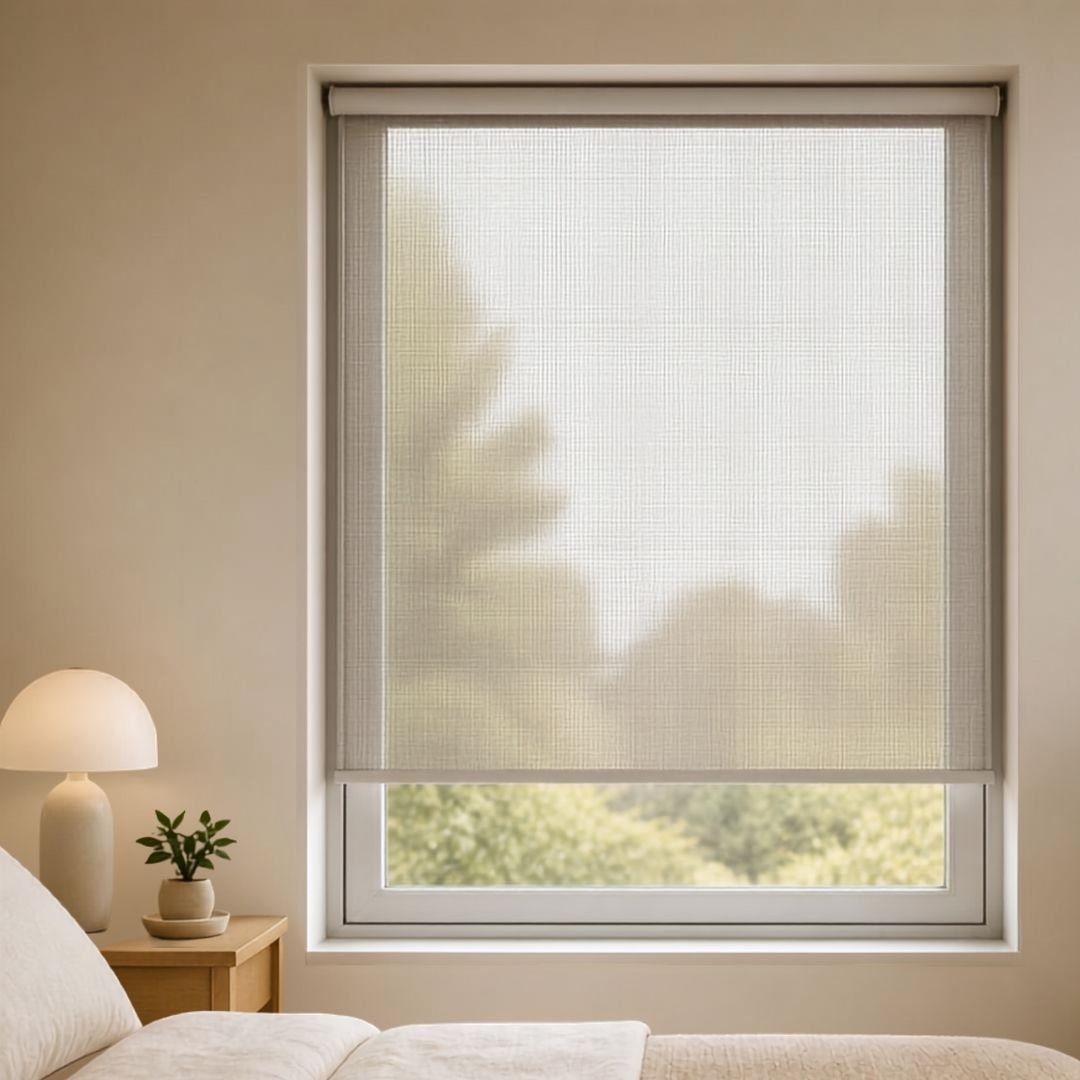
This is the most important thing to know before you buy: sunscreen blinds give daytime privacy, not night-time privacy. During the day the outside is brighter than the inside, so people outside see the blind, not your room. At night, with lights on inside, the effect flips and people can see in.
If the room faces a street, a neighbouring building or a shared corridor, plan for night privacy too. Common solutions:
- A double roller blind: a sunscreen blind and a blackout blind on one bracket.
- Curtains in front of the blind for the evening, which also soften the room.
- Zebra blinds, which alternate sheer and solid bands so you can switch between view and privacy with one blind.
AvoidUsing a high-openness sunscreen blind as the only covering in a bedroom. It won’t make the room dark, and it won’t give privacy at night. Bedrooms usually need blackout, either on its own or layered.
Choosing by room
| Room | Suggested openness | Why |
|---|---|---|
| Living room with big glass | Around 3% | Balances glare, heat and view |
| TV room or home office | Around 1–3%, darker colour | Cuts screen glare |
| Kitchen | Around 3–5% | Keeps it bright while cutting heat |
| Shaded balcony door | Around 5% | Keeps the view clear |
| Bedroom | Sunscreen plus blackout | Day light control and night darkness |
For wide sliding doors, the same fabrics come as sunscreen panel blinds, which may suit better than one very wide roller. Our guide to panel blinds for sliding doors explains how to size them.
Looking after sunscreen fabric
Sunscreen fabrics are tough and handle UAE sun well, but dust settles into the weave. Vacuum them gently with a soft brush attachment every few weeks, and spot-clean marks with a damp cloth and mild soap. Don’t scrub or soak the fabric, and don’t roll the blind up while it’s wet.
Key takeaways
- Openness is the percentage of open weave: lower blocks more glare and heat, higher keeps more view.
- Around 3% openness suits most UAE living rooms.
- Darker colours give a clearer view and less glare; lighter colours reflect more heat.
- Sunscreen blinds give daytime privacy only; plan a blackout layer or curtains for night.
- Always compare samples at your own window when the sun is strongest.
Frequently asked questions
What openness is best for sunscreen blinds in Dubai?
For most living rooms, around 3% is the best balance of glare control, heat reduction and view. Choose around 1% for very sunny west-facing rooms or screens, and around 5% for shaded windows.
Do sunscreen roller blinds reduce heat?
Yes. They stop much of the direct sun from reaching the room, which reduces heat and glare. Lower openness and lighter-coloured backings generally block more heat.
Can people see through sunscreen blinds at night?
Yes, when lights are on inside, people outside can see in. Sunscreen blinds give daytime privacy. For night privacy, add a blackout blind or curtains.
Are sunscreen blinds the same as sheer blinds?
No. Sheer blinds are soft and decorative and filter light gently. Sunscreen blinds use a technical mesh designed to cut glare and heat while keeping the view.
Which colour sunscreen blind gives the best view?
Darker colours. They absorb light and reduce glare on the fabric, so the view outside looks clearer.
The bottom line
Sunscreen roller blinds are one of the most useful window coverings for UAE homes. They tame harsh sun without shutting out the view. Choose the openness for how much sun the window takes, choose the colour for whether you care more about view or heat, and remember to plan for privacy at night. Seeing samples at your own window is the quickest way to get it right.
Related products
 Sunscreen Roller BlindFrom AED 120 / m²
 Blackout Roller BlindFrom AED 130 / m²
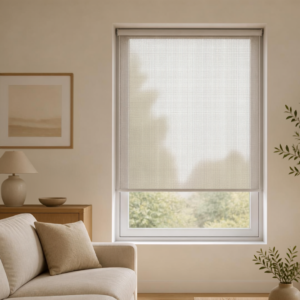 Sheer Roller BlindFrom AED 110 / m²
 Zebra BlindsFrom AED 140 / m²
See sunscreen fabrics in your own light
We bring sunscreen samples in different openness levels and colours, so you can compare them at your window before you decide. The visit is free, with no obligation.
Book a free visitWhatsApp us